
5 Lessons on Growing a Laundromat Business, Straight from New York City
Most laundromat owners know location matters. In New York City, it’s everything. Dense neighborhoods, limited in-unit laundry and customer volume make the New York City laundromat market one of the most active, and most demanding, in the country. For owners weighing where and how to grow, few markets teach the fundamentals of a profitable laundromat business faster.
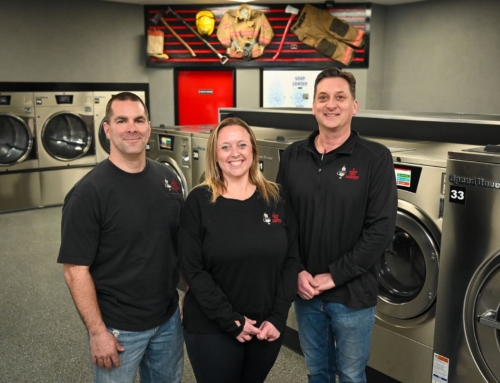
In this episode of the “Laundry Nerd Podcast,” Christian Almonte, Vice President of Lav Express Laundromats, talks with host Randy Radtke about what it takes to operate and grow a laundromat business in that environment, and what went into building a large-format location in Queens. The conversation is a practical look at how density, layout and community shape performance in a market that rewards owners who plan ahead.
Christian shares his perspective on several themes every owner can use:
- What drives demand in the New York City laundromat market
- Lessons learned as a second-generation laundromat owner
- What went into opening a large-format laundromat in Queens
- How thinking community-first shapes the in-store experience
- Why equipment reliability and store flow protect long-term profitability
What Makes New York City a High-demand Laundromat Market?
In a single word: density.
In many New York City neighborhoods, residents live in apartments with limited or no in-unit laundry. That creates a consistent need for laundromats that can handle capacity, deliver convenience and meet the standards today’s customers expect.
In this market, every detail matters. Location, store layout, equipment mix and customer flow all shape how a laundromat business operates in New York, where customers expect to get in, get it done and move on. Owners who win in these neighborhoods treat throughput as a core asset. The faster a store turns loads without sacrificing wash quality, the more revenue each square foot can generate across a busy day.
That is also why equipment decisions carry so much weight. In a high-volume store, machines run hard, all day, every day. Owners who build with durable, performance-focused equipment spend less time on downtime and more time serving the next customer. It is the kind of reliable performance Speed Queen has built its reputation on for more than a century.
“It’s not about opening a laundromat because there are a lot of people nearby. It’s about asking, ‘How can we have an impact?’”
—Christian Almonte
Lessons from Lav Express Laundromat
As Vice President of Lav Express, a 19-location operation spanning four New York City boroughs, Christian has a direct view of what it takes to operate and grow in this market. When a 14,000-square-foot former Staples in Jackson Heights became available, his team saw an opportunity: bring something the neighborhood did not just need, but could be proud of.
The result is a large-format flagship with 132 washers, 126 dryers and murals by local artist Juan Da Vinci, and not a single parking space. In a dense, walkable neighborhood, that tradeoff was the point. The store was designed for the people who live within a few blocks of it, not for drivers passing through.
For laundromat owners thinking about scale, that decision is instructive. Growth is not only about adding machines. It is about understanding the customer, the block and the daily rhythm of the neighborhood, then designing a store that fits all three. Christian’s experience offers concrete takeaways on location, customer expectations and building something that lasts.
Second-generation ownership shapes that view. Christian grew up around the business, which gives him a long-term lens on decisions that newer owners sometimes rush. He treats each location as part of a portfolio, weighing how a single store strengthens the brand customers already trust across the city.
How Community-First Thinking Drives Performance
One theme runs through the entire conversation: a great store is built for its community first. When owners design around the people they serve, loyalty follows, and loyalty is what fills machines on a Tuesday afternoon as reliably as a Saturday morning. That mindset also informs the in-store experience. Clean, well-lit, easy to navigate spaces with reliable equipment send a clear message that the owner respects the customer’s time.
Key takeaways for owners
Density drives demand. In dense, apartment-heavy markets, consistent foot traffic rewards stores built for capacity and speed.
Design for the neighborhood. Trade conventional assumptions, such as parking, for what your specific customers actually need.
Invest in reliable equipment. High-volume stores depend on machines that perform day after day to protect uptime and profitability.
Think long term. Second-generation discipline, treating each store as part of a portfolio, supports durable growth.
Hear the Full Story
This is just a glimpse of what Christian and his team have built in New York. For the full conversation, including what it is really like to grow a laundromat business in one of the country’s most competitive markets, listen to New York State of Mind on the Speed Queen Laundry Nerd podcast.
You can also find the Laundry Nerd podcast on Spotify and Apple Podcasts.